Showing posts with label mortgage rates. Show all posts

Tuesday, November 28, 2017

U.S. home prices soar by the most in 3 years, led by Seattle


WASHINGTON (AP) — U.S. home prices rose at the fastest pace in more than three years in September, lifted by a record-low supply of houses for sale. Seattle posted the highest year-over-year increase, topping all other cities by a hefty margin.

The Standard & Poor's CoreLogic Case-Shiller national home price index released Tuesday rose 6.2 percent in September from a year earlier, the largest gain since June 2014. In 13 of the 20 cities tracked by the index, yearly price gains in September were faster than in August.
Home buyers are desperately bidding up prices because so few properties are available. The number of homes for sale in September was the fewest for that month on records dating back to 2001, according to the National Association of Realtors. And home builders aren't yet putting up enough new homes to reduce the supply crunch.

Seattle, Las Vegas and San Diego reported the highest year-over-year gains. Home prices jumped 12.9 percent in Seattle, 9 percent in Las Vegas and 8.2 percent in San Diego. Las Vegas, one of the hardest-hit cities in the housing bust, has been making a comeback since prices bottomed out in 2012.
Home prices rose in all 20 cities. The smallest gains were in Washington D.C., where prices rose 3.1 percent; Chicago, with a 3.9 percent gain; and Miami, at 5 percent.
Unemployment is low and the economy is growing at a solid clip, fueling demand for homes. Mortgage rates also remain historically low, with the average rate on a 30-year mortgage below 4 percent.

Yet Americans are remaining in their homes longer, according to a recent survey by the Realtors. Many are reluctant to sell because there are so few other homes to buy.
Builders are responding to the pent-up demand by building more houses. The construction of new homes jumped nearly 14 percent in October to the fastest pace in a year. But home builders are struggling to find the workers and land they need to ramp up construction more quickly.
"The past two months have shown promising signs of life from builders," Svenja Gudell, chief economist at real estate data provider Zillow, said. "But it's going to take a lot more than two good months to fully erase the housing deficit we're facing after years of underbuilding."
The Case-Shiller index covers roughly half of U.S. homes. The index measures prices compared with those in January 2000 and creates a three-month moving average. The September figures are the latest available.

Robert bobby Darvish platinum Lending Solutions

Wednesday, August 2, 2017

Mortgage applications slide 2.8%, even as interest rates stay low


  • Total mortgage application volume fell 2.8 percent on a seasonally adjusted basis last week compared with the previous week, according to the Mortgage Bankers Association.
  • Mortgage applications to refinance a home loan fell 4 percent for the week, seasonally adjusted, and were 41 percent lower than the same week one year ago.
  • Mortgage applications to purchase a home, which are far less sensitive to weekly rate moves, fell 2 percent for the week.


Both homeowners and homebuyers are taking a step back from the mortgage market, as stagnant interest rates give them no particular reason to act quickly.
Total mortgage application volume fell 2.8 percent on a seasonally adjusted basis last week compared with the previous week, according to the Mortgage Bankers Association. Volume was 22 percent lower compared with the same week one year ago, due to much lower volume in refinances.
Mortgage applications to refinance a home loan fell 4 percent for the week, seasonally adjusted, and were 41 percent lower than the same week one year ago, when interest rates were lower. Refinance volume is particularly sensitive to weekly rate moves, but rates have been so low for so long that there is a shrinking pool of borrowers who might benefit from a refinance. Rates are currently hovering around the lowest level in five weeks.
The average contract interest rate for 30-year fixed-rate mortgages with conforming loan balances ($424,100 or less) remained unchanged at 4.17 percent, with points decreasing to 0.36 from 0.40 (including the origination fee) for 80 percent loan-to-value ratio (LTV) loans.
"It was an up and down time for rates last week in response to mixed economic news coupled with the Fed's FOMC statement," said Joel Kan, MBA's associate vice president of industry surveys and forecasting. "The statement outlined a mostly healthy outlook, with a slight concern over inflation and the news that balance sheet reduction could begin 'relatively soon.'"
Mortgage applications to purchase a home, which are far less sensitive to weekly rate moves, fell 2 percent for the week. That is the second straight decline and the lowest level since last March. Purchase applications were 9 percent higher than the same week one year ago.
Homebuyers today are less concerned with interest rates and more concerned with overheating home prices and a severe shortage of houses for sale.
Mortgage rates moved even lower to start this week due to some weak economic data.
"GM posted a sharp decline in auto sales," noted Matthew Graham, chief operating officer of Mortgage News Daily. "This builds a case for economic weakness, leading more traders to seek safer returns in the bond market. Excess demand for bonds results in lower interest rates."
A bigger move could come at the end of this week when the Labor Department releases the monthly employment report.
The refinance share of mortgage activity decreased to 45.5 percent of total applications from 46.0 percent the previous week. The adjustable-rate mortgage share of activity decreased to 6.6 percent of total applications.
The Federal Housing Administration share of total applications increased to 10.3 percent from 10.2 percent the week prior. The Department of Veterans Affairs share of total applications decreased to 10.1 percent from 10.5 percent the week prior. The Department of Agriculture share of total applications remained unchanged at 0.8 percent from the week prior.

Robert Bobby Darvish of Platinum Lending Solutions

Thursday, July 27, 2017

Mortgage rates slide lower as Fed considers unwinding its balance sheet


(Paul J. Richards/AFP/Getty Images)
Mortgage rates fell for the second week in a row ahead of the Federal Reserve’s July meeting.
According to the latest data released Thursday by Freddie Mac, the 30-year fixed-rate average slipped to 3.92 percent with an average 0.5 point. (Points are fees paid to a lender equal to 1 percent of the loan amount.) It was 3.96 percent a week ago and 3.48 percent a year ago.
The 15-year fixed-rate average dropped to 3.2 percent with an average 0.5 point. It was 3.23 percent a week ago and 2.78 percent a year ago. The five-year adjustable rate average fell to 3.18 percent with an average 0.5 point. It was 3.21 percent a week ago and 2.78 percent a year ago.
The Federal Reserve left its benchmark rate unchanged after its meeting this week but signaled that it would start rolling back its balance sheet “relatively soon.” The announcement came too late in the week to factor into Freddie Mac’s survey. The government-backed mortgage-backer aggregates current rates weekly from 125 lenders from across the country to come up with national average mortgage rates.
Any shrinking of the central bank’s $4.5 trillion portfolio is likely going to have an impact on mortgage rates. The Fed has said it would reduce its holdings gradually, but too quick of a sell-off could send rates skyrocketing. Back in 2013 when then-Fed chairman Ben Bernanke testified before Congress about tapering the bond-buying program, the “taper tantrum” fueled a rapid rise in rates.
Michael Fratantoni, Mortgage Bankers Association chief economist, expects the Fed to announce in September that it will begin unwinding its balance sheet in October. He also predicts another rate increase later this year.
“The job market is tight,” Fratantoni said. “Many employers are finding it increasingly challenging to fill open positions. And yet wage growth and price inflation remain low. We agree with the Fed’s expectation that inflation will increase later this year and into next, and this will prompt further increases in the Fed’s short-term target, with the next hike most likely coming in December.”
Despite the news out of the Fed, most of the experts surveyed by Bankrate.com, which puts out a weekly mortgage rate trend index, say rates will remain relatively stable in the coming week.
“Even with the dial back on their balance sheet beginning ‘relatively soon,’ the Fed’s concerns about low inflation will keep a lid on mortgage rates for now,” said Greg McBride, chief financial analyst at Bankrate.com.
Meanwhile, mortgage applications were flat last week, according to the latest data from the Mortgage Bankers Association. The market composite index — a measure of total loan application volume — increased 0.4 percent. The refinance index rose 3 percent, while the purchase index fell 2 percent.
The refinance share of mortgage activity accounted for 46 percent of all applications.

Wednesday, July 5, 2017

Next up for markets: Fed could set a hawkish tone

Next up for markets: Fed could set a hawkish tone

  • The Fed is likely to reveal some detail about its plan to begin the unwind of its $4.5 trillion balance sheet when it releases minutes from its last meeting at 2 p.m.
  • If the Fed seems confident that inflation will move higher, or shows it wants to tighten because of financial conditions, the market may take its message as "hawkish."
  • A hawkish Fed, appearing ready to raise interest rates, could trigger a sell-off in stocks and in Treasurys, which would send bond yields higher.


Federal Reserve Board Chairwoman Janet Yellen
Joshua Roberts | Reuters
Federal Reserve Board Chairwoman Janet Yellen
The Federal Reserve could have an impact on trading when it releases the minutes from its last meeting Wednesday afternoon, particularly if it appears confident that it could raise interest rates again this year.
The Fed is also likely to provide some insight into its plan to unwind its $4.5 trillion balance sheet, which many market pros expect to begin in September. The Fed intends to taper back on its practice of replacing Treasurys and mortgages, as the issues it holds mature. Those securities were first purchased as part of the extraordinary easing it used to fight the financial crisis.
But traders were also focused on the fact that Fed speakers and even the European Central Bank have been sending somewhat hawkish messages recently, and the minutes could lean toward those comments.
"It almost seems like a concerted message from people at the Fed about financial conditions being very easy, perhaps too easy," said Stephen Stanley, chief economist at Amherst Pierpont. "It would be interesting to see if the committee discussed that and what the rhetoric was. …[Janet] Yellen, [Stanley] Fischer, [William] Dudley, each of them talked about financial conditions being easy one way or the other."
Stanley said Dudley, the New York Fed president, has made it clear if the Fed raises rates, and the markets react, it could slow its hiking. But if markets do not react at all, the Fed could increase its activity, he said.
The Fed minutes, to be released at 2 p.m. ET, are the first in a series of events that could reveal more about Fed policy for the second half of the year. On Friday, the June employment report will be released, and markets are watching the wages data to see if there are any early signs of returning inflation. Later Friday morning, the Fed will release its semi-annual monetary policy report at 11 a.m. ET, five days ahead of Fed chair Yellen's economic testimony before Congress. Then, the Federal Open Market Committee meets again on July 25 and 26, where it is not expected to take action on interest rates but could reveal more about its intentions.
The markets have doubted the Fed will hike rates for a third time this year, giving just about 50 percent odds for a September rate rise. Analysts are watching the minutes to see if the Fed signals that the recent dip in inflation is temporary and that it is on track to move ahead on interest rates unless the economy softens.
Bond market pros are also looking to see if the Fed will reveal any clues about when it will start tapering back its purchases of Treasury and mortgage securities.
The minutes are from the June 14 meeting when the FOMC raised rates for a second time this year and revealed details on how it intends to gradually begin paring back its balance sheet.
"Right now, many market participants don't expect a [rate hike] in September," said Kate Warne, investment strategist at Edward Jones. "Investors are thinking they won't move unless they get stronger inflation." She said the Fed could indicate it is willing to discount the downward move in inflation as short-term.
"If the minutes are more hawkish than expected, we would see investors surprised by the minutes. I don't think that's likely to be the case. Stocks would probably react negatively and interest rates would continue to rise," Warne said.
Stocks started out the month of July Monday on an upswing that sent the Dow to new highs, but selling in technology stocks pulled down the Nasdaq. On Wednesday, stocks opened slightly higher, after the July 4 holiday Tuesday. Treasury yields were also higher, and the dollar was firmer, ahead of the release of Fed minutes.
The yield on the 2-year note, the most sensitive to Fed hiking, was at 1.41 percent, after touching 1.426 percent Monday, its highest level since 2009.
"I think the expectations are for the Fed to confirm their tapering intentions," said Ian Lyngen, head of U.S. rates strategy at BMO.
"I think a September taper has become very consensus," said Lyngen. "If you see a uniform view reflected within the minutes, I think it's going to be bearish in the Treasury market because it suggests there will be follow-through with the tapering and hiking. If there's a divergence, it would be bullish."
Treasury yields move opposite prices, so a hawkish view would send rates higher.
"I don't really think they're going to change the overall tone or direction of the Treasury market," said Lyngen, adding he would expect the most action in the 5-year note as a reflection of future Fed policy moves. The 5-year yield was at 1.93 percent Wednesday. The 10-year was at 2.34 percent.
"I certainly don't think we'll get a rate hike in July, but I do think there's a chance we'll get the balance sheet announcement in July," said Lyngen. "You could make a case for September. My thought is they want to keep the balance sheet discussion separate as much as possible."
The Fed has said it would pause in its rate hiking when it begins action on its balance sheet. The balance sheet reduction is expected to put slight upward pressure on interest rates.
The Fed said it would cap its tapering back of purchases of Treasurys and mortgages at $10 billion a month, before increasing the cap at three-month intervals. The Fed is not adding to its balance sheet any longer, but it does replace securities it holds as they mature. It is that process that will be "tapered" back.

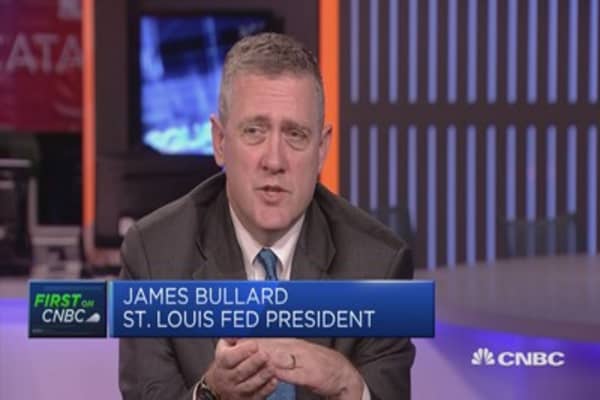
WATCH: On rates, I'm the most dovish on the committee right now: Fed's Bullard

Friday, May 12, 2017

Mortgage rates edge higher but remain within a narrow band

Mortgage rates edge higher but remain within a narrow band

 
Mortgage rates wandered higher again this week after a brief slip but remain within a narrow band.
According to the latest data released Thursday by Freddie Mac, the 30-year fixed-rate average ticked up to 4.05 percent with an average 0.5 point. (Points are fees paid to a lender equal to 1 percent of the loan amount.) It was 4.02 percent a week ago and 3.57 percent a year ago. The 30-year average has hovered between 4.02 percent and 4.05 percent the past three weeks.
“Mixed economic reports over the last few weeks have anchored the 30-year mortgage rate around the 4 percent mark,” Sean Becketti, Freddie Mac chief economist, said in a statement.
The 15-year fixed-rate average rose to 3.29 percent with an average 0.5 point. It was 3.27 percent a week ago and 2.81 percent a year ago. The five-year adjustable rate average increased to 3.14 percent with an average 0.5 point. It was 3.13 percent a week ago and 2.78 percent a year ago.
With the yield on the 10-year Treasury climbing to 2.42 percent Tuesday, its highest point since March 30, home loan rates — which tend to follow the movement of long-term bonds — were slowing moving higher. Then came the unexpected firing of FBI Director James B. Comey. Because this type of news makes investors anxious and causes them to seek safety in bonds, the yield on the 10-year U.S. bond slid to 2.41 percent Wednesday.
The retreat in long-term bond yields came too late in the week to be factored into Freddie Mac’s survey. The government-backed mortgage-backer aggregates rates weekly from 125 lenders from across the country to come up with a national home loan rate average.
Experts are mixed on where mortgage rates are headed. Rates had fallen in 6 of the past 7 weeks. Bankrate.com, which puts out a weekly mortgage rate trend index, found that about half of the experts it surveyed say rates will go up and another half say they will remain relatively stable in the coming week. Less than 10 percent say they will fall. Greg McBride, chief financial analyst for Bankrate.com, is one who expects rates to rise.
“The job market is tightening, inflation is moving up, and the Fed is poised to raise rates in June — all of which is providing some lift to mortgage rates,” McBride said.
Meanwhile, mortgage applications picked up last week, according to the latest data from the Mortgage Bankers Association. The market composite index — a measure of total loan application volume — increased 2.4 percent. The refinance index rose 3 percent, while the purchase index grew 2 percent to its highest level since October 2015.
The refinance share of mortgage activity accounted for 41.9 percent of all applications.

Robert Bobby Darvish platinum Lending Solutions of Orange County
Tuesday, April 4, 2017

Why We Could Get Negative Interest Rates Even Though The Fed Is Hiking

Why We Could Get Negative Interest Rates Even Though The Fed Is Hiking


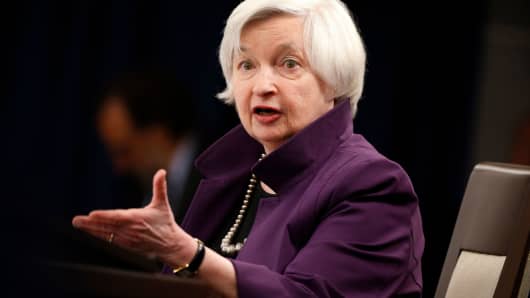
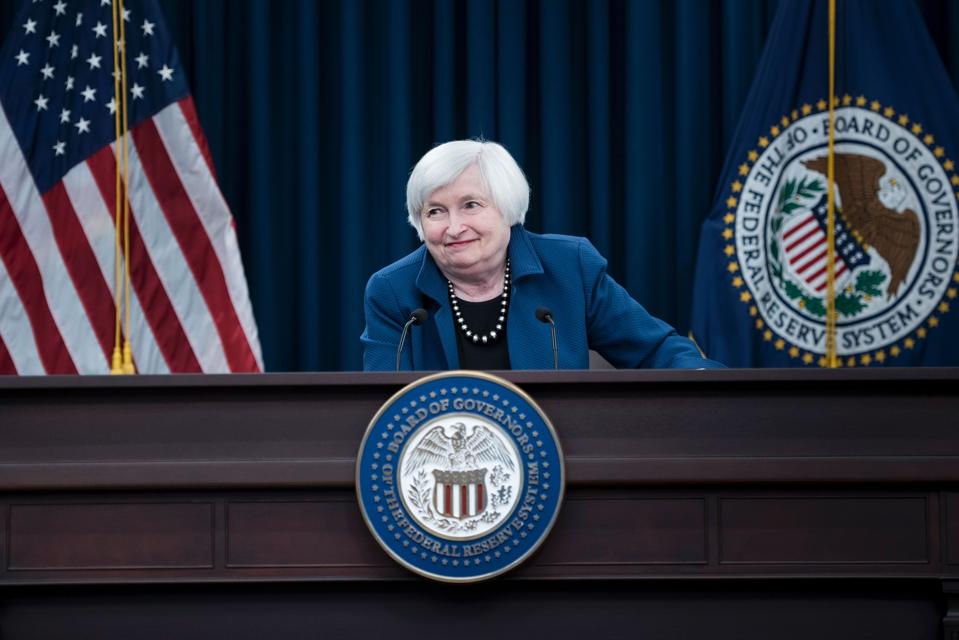
Federal Reserve Board Chairman Janet Yellen speaks during a briefing on March 15, 2017 in Washington, DC. / AFP PHOTO / Brendan Smialowski/Getty Images
At its March meeting, the Federal Reserve raised interest rates by 0.25%. In doing so, it hiked rates for only the third time since 2006. However, in a strange turn of events, the Fed’s move was perceived as a dovish one by the markets.
That’s because even with inflation at its highest level since 2012, the Fed said monetary policy will remain accommodative for some time. As has been the case in the past, the Fed is willing to let inflation consolidate above its 2% target before embarking on a more aggressive tightening path.
This willingness to let inflation run hot means even as nominal rates rise, real ratesthat is, the nominal interest rate minus inflationare headed into negative territory.
So what are the implications of negative real rates?
Negative Real Rates Drive Gold Higher
The consumer price index (CPI), the most widely used measure of inflation, averaged 2.67% for the first two months of the year. Even if inflation averaged only 2% for all of 2017the Fed’s targetit would be a big problem for investors and savers alike.
Today, a one-year bank CD pays about 1.4%. Therefore, anyone who keeps their money in a bank is watching their purchasing power erode.
Of course, there are other options. You can put your money in U.S. Treasuries or dividend-paying stocksboth popular sources of fixed income.
However, with both the 10-year Treasury yield and the average dividend yield for a company on the S&P 500 hovering around 2.35%, that doesn’t leave much in the way of real gains if inflation is running at 2% per annum.
If inflation rises or bond yields fall, real interest rates will be pushed into the red… and that’s very bullish for gold.
Gold is known as the yellow metal with no yield, but simple math tells us no yield is better than a negative one. Because of this, gold has done well when real rates are in negative territory. In fact, real US interest rates are a major determinate of which direction the price of gold moves in.
A study from the National Bureau of Economic Research found that from 1997–2012, the correlation between real U.S. interest rates and the gold price was -0.82.
This means as real rates rise, the price of gold falls and vice versa. A -1.0 reading would be a perfect negative correlation, so this is a tight relationship.

The Fed’s hesitation to raise rates faster is contributing to another trend that is also bullish for gold.
A Falling Dollar Equals Higher Gold Prices
In the six weeks following the US election, the dollar skyrocketed 5.6%a huge move for a currency.
However, since the beginning of the year, the greenback has given back most of its post-election gains. This is in part due to the Fed’s dovishness on interest rates.
The strong negative correlation between gold and the U.S. dollar is a major reason the yellow metal is up over 9% year to date.
Market Realist
Market Realist
In the March edition of Bank of America Merrill Lynch’s Global Fund Manager Survey, respondents thought the dollar was at its most overvalued level since 2006. As the chart shows, the survey has a good track record of determining when the dollar is overvalued.
Bank of America Merrill Lynch
Tying it all together, what do these trends mean for gold?
Gold Should Go Higher from Here
With arguably the two biggest drivers of the gold price trending in the yellow metals favor, gold is likely to go higher. Although the dollar could rise if Washington implements some structural reform, real rates aren’t headed higher anytime soon based on the Fed’s actions.
Bank of America Merrill Lynch said these two trends were part of the reason why it upgraded its forecast for gold to $1,400 per oz. by year-end. As the chart below shows, the market turned bullish on gold following the Fed’s December rate hike.
In closing, after nine years of doing its utmost to generate inflation, the Fed has finally succeeded. If past is prologue, as inflation rises over the coming months, gold will do very well.
If you’re considering getting some gold before it goes up, do your homework first.

Robert Bobby Darvish Platinum Lending Solutions

Friday, February 24, 2017

Mortgage rates move lower for Friday Feb 24 2017

Mortgage rates move lower for Friday


Several key mortgage rates dropped today. The average rates on 30-year fixed and 15-year fixed mortgages both decreased. On the variable-mortgage side, the average rate on 5/1 adjustable-rate mortgages also fell.
Mortgage rates are in a constant state of flux, but, overall, they are very low by historical standards. If you're in the market for a mortgage, it may be a great time to lock in a rate. Just make sure you shop around first.
RATE SEARCH: Compare mortgage rates in your area now.

30-year fixed mortgages

The average rate you'll pay for a 30-year fixed mortgage is 3.97 percent, down 7 basis points
over the last week. A month ago, the average rate on a 30-year fixed mortgage was higher, at 4.09 percent.
At the current average rate, you'll pay a combined $475.69 per month in principal and interest for every $100,000 you borrow. That's a decline of $4.03 from last week.
You can use Bankrate's mortgage calculator to estimate your monthly payments and see how much you'll save by adding extra payments. It will also help you calculate how much interest you'll pay over the life of the loan.

15-year fixed mortgages

The average 15-year fixed-mortgage rate is 3.16 percent, down 2 basis points
over the last seven days.
Monthly payments on a 15-year fixed mortgage at that rate will cost around $698 per $100,000 borrowed. The bigger payment may be a little more difficult to find room for in your monthly budget than a 30-year mortgage payment would, but it comes with some big advantages: You'll come out several thousand dollars ahead over the life of the loan in total interest paid and build equity much more quickly.

5/1 ARMs

The average rate on a 5/1 ARM is 3.15 percent, falling 1 basis point from a week ago.
These types of loans are best for those who expect to sell or refinance before the first or second adjustment. Rates could be substantially higher when the loan first adjusts, and thereafter.
Monthly payments on a 5/1 ARM at 3.15 percent would cost about $430 for each $100,000 borrowed over the initial five years, but could increase by hundreds of dollars afterward, depending on the loan's terms.

Where rates are headed

To see where Bankrate's panel of experts expect rates to go from here, check out our Rate Trend Index.
RATE SEARCH: Want to see where rates are right now? See local mortgage rates.
Average mortgage rates
Product Rate Change Last week
30-year fixed 3.97% 0.07 4.04%
15-year fixed 3.16% 0.02 3.18%
30-year fixed jumbo 4.46% 0.16 4.30%
30-year fixed refinance 3.99% 0.09 4.08%
Last updated: February 24, 2017.
Methodology: The rates you see above are Bankrate.com Site Averages. These calculations are run after the close of the previous business day and include rates and/or yields we have collected that day for a specific banking product. Bankrate.com site averages tend to be volatile -- they help consumers see the movement of rates day to day. The institutions included in the "Bankrate.com Site Average" tables will be different from one day to the next, depending on which institutions' rates we gather on a particular day for presentation on the site.
To learn more about the different rate averages Bankrate publishes, see "Understanding Bankrate's Rate Averages."

Bobby Robert Darvish Platinum Lending Solutions Orange County

Thursday, January 12, 2017

Average US 30-Year Mortgage Rate Falls to 4.12 Percent


Long-term US mortgage rates fell this week, the second week of declines after snapping a nine-week run of increases.
Mortgage buyer Freddie Mac said Thursday the rate on 30-year fixed-rate loans eased to an average 4.12 percent from 4.20 percent last week. That was still sharply higher than a 30-year rate that averaged 3.65 percent for all of 2016, the lowest level recorded from records going back to 1971. A year ago, the benchmark rate stood at 3.92 percent.
The average for a 15-year mortgage declined to 3.37 percent from 3.44 percent last week.
Mortgage rates surged in the weeks since the election of Donald Trump in early November. Investors in Treasury bonds bid yield rates higher because they believe the president-elect's plans for tax cuts and higher spending on roads, bridges and airports will drive up economic growth and inflation.
That would depress prices of long-term Treasury bonds because inflation would erode their value over time, a prospect that caused investors to demand higher yields.
In the latest week, a report from the government on employment in December pushed the price of the 10-year Treasury bond higher, dampening its yield. The Labor Department report issued last Friday showed that U.S. employers added 156,000 jobs last month, capping a year of slower but solid hiring.
Though the unemployment rate rose to 4.7 percent from a nine-year low of 4.6 percent, it did so for an encouraging reason: More people began looking for work. Because not all of them found jobs immediately, more people were counted as unemployed in December.
Bond yields move opposite to prices and influence long-term mortgage rates. The yield on the 10-year Treasury bond fell to 2.37 percent Wednesday from 2.44 percent a week earlier. That compares with 1.87 percent on Election Day Nov. 8. The yield declined further to 2.33 percent Thursday morning.
To calculate average mortgage rates, Freddie Mac surveys lenders across the country between Monday and Wednesday each week. The average doesn't include extra fees, known as points, which most borrowers must pay to get the lowest rates. One point equals 1 percent of the loan amount.
The average fee for a 30-year mortgage was unchanged this week at 0.5 point. The fee on 15-year loans also remained at 0.5 point.
Rates on adjustable five-year loans fell to 3.23 percent from 3.33 percent. The fee increased to 0.5 point from 0.4 point.

Robert Bobby Darvish of Platinum Lending Solutions
 

Tuesday, December 20, 2016

Why you shouldn't panic about rising mortgage rates

Why you shouldn't panic about rising mortgage rates


Mortgage rates have been on a steady rise recently, but buyers shouldn't panic -- rates are still very low.

The average rate for a 30-year fixed-rate mortgage rose to 4.16%, up from 4.13% last week, according to Freddie Mac. A year ago, rates were sitting around 3.97%.

At the current interest rates, buyers will pay $21 more per month compared to a year ago, assuming a $241,000 price tag and 20% down payment.

"I don't think anyone welcomes higher interest rates, but it should not be a considerable deterrent to someone who really wants to buy a home," said Keith Gumbinger, vice president of HSH.com.
Rates under 5% have been the norm for a decade. "We still have quite a ways to go for rates to be even close to average," noted Len Kiefer, deputy chief economist for Freddie Mac.
In 1996, the average rate was 5.67%, and in 1990 it was 10.13%.
Related: Mnuchin wants U.S. to sell Fannie Mae, Freddie Mac stakes
Rising home prices, fueled by strong demand and tight inventory, have pinched buyers in recent years. Lower interest rates helped temper that rise, but as they move higher, borrowing becomes more costly and can reduce a buyer's budget.
"If rates remain at this level, some marginal buyers could be pushed out of the marketplace," said Gumbinger. "There could be less demand for properties on the margin, but I don't think there will be a huge change."
Kiefer said he expects home prices to continue to rise in 2017 year, but at a slower pace than we saw this year. "The supply is pretty low compared to demand and that will keep pressure on prices and rents."
The rate increases could be felt more by house hunters in the country's more expensive markets, like San Francisco and Manhattan.
"Affordability is already difficult in some markets," said Erin Lantz, vice president of mortgages for Zillow. "Rates can have more of an impact in those areas, but for most of the country, it's still very affordable, by historical standards"
Mortgage loan applications dropped 4% last week, according to the Mortgage Bankers Association.
Experts forecast rates will continue to gradually increase throughout 2017, particularly after the Federal Reserve increased a key interest rate on Wednesday for the second time in 10 years.
A higher Federal Funds rate makes it more expensive for banks to borrow money, which can lead to higher rates on credit cards and home loans.
Related: What a Fed rate hike means for you
"The era of ultra-low interest rates is over," said Lawrence Yun, chief economist of the National Association of Realtors, in a statement Wednesday. "[The] short-term rate hike will be followed by several additional rounds of increases in 2017 and 2018. Despite these moves, mortgage rates will not rise alarmingly."
The bond market also plays a role in mortgage rates. Interest rates on the U.S. government's 10-year Treasury note have been on a tear since Donald Trump was elected president. Treasury notes are a benchmark for many types of credit, including home loans.
Other factors -- like global economic uncertainty -- also affect U.S. mortgage rates.
"Global markets have sneezed and hiccupped and gone crazy at times and have driven down our interest rates," said Gumbinger.
For instance, after the Brexit vote in June, the rate on a 30-year fixed rate mortgage dropped to 3.48% -- the lowest level since May 2013.
As rates move higher, we could see the return of more home loan products, like adjustable rate mortgages.
"Non-traditional mortgage products could start to creep back into the market as consumers search for more affordable options," said Lantz.

Thursday, December 15, 2016

Mortgage Rates Move Higher

Mortgage Rates Move Higher


Mortgage Rates Move Higher
MCLEAN, VA--(Marketwired - Dec 15, 2016) - Freddie Mac ( OTCQB : FMCC ) today released the results of its Primary Mortgage Market Survey® (PMMS®), showing average fixed mortgage rates moving higher for the seventh consecutive week.
News Facts
  • 30-year fixed-rate mortgage (FRM) averaged 4.16 percent with an average 0.5 point for the week ending December 15, 2016, up from last week when it averaged 4.13 percent. A year ago at this time, the 30-year FRM averaged 3.97 percent.

  • 15-year FRM this week averaged 3.37 percent with an average 0.5 point, up from last week when it averaged 3.36 percent. A year ago at this time, the 15-year FRM averaged 3.22 percent.

  • 5-year Treasury-indexed hybrid adjustable-rate mortgage (ARM) averaged 3.19 percent this week with an average 0.4 point, up from last week when it averaged 3.17 percent. A year ago, the 5-year ARM averaged 3.03 percent.

Average commitment rates should be reported along with average fees and points to reflect the total upfront cost of obtaining the mortgage. Visit the following link for the Definitions. Borrowers may still pay closing costs which are not included in the survey.
Quote
Attributed to Sean Becketti, chief economist, Freddie Mac.
"As was almost-universally expected, the FOMC closed the year with its one-and-only rate hike of 2016. The consensus of the committee points to more rate hikes in 2017. However, the experience of this year combined with the policy uncertainty that accompanies a new Administration suggests a wait-and-see outlook.
"This week's mortgage rate survey was completed prior to the FOMC announcement. The 30-year mortgage rate rose 3 basis points on the week to 4.16 percent. The MBA's Applications Survey posted drops in both refinance and purchase applications, registering the impact of recent mortgage rate increases. If rates continue their upward trend, expect mortgage activity to be significantly subdued in 2017."
Freddie Mac was established by Congress in 1970 to provide liquidity, stability and affordability to the nation's residential mortgage markets. Freddie Mac supports communities across the nation by providing mortgage capital to lenders. Today Freddie Mac is making home possible for one in four home borrowers and is the largest source of financing for multifamily housing.  Robert Bobby Darvish of Platinum Lending Solutions Orange County

Sunday, November 6, 2016

Mortgage Rates Inch Up; Solid Jobs Report Is Consistent With a December Rate Rise

Mortgage rates inched ahead on Friday; meanwhile, 161,000 jobs added in October and advancing hourly wages are consistent with a December rate rise from the Fed.

Nov 4, 2016 at 2:19PM
House For Sale
IMAGE SOURCE: PIXABAY.
Mortgage rates inched up on Friday: The average 30-year mortgage rate is 3.49%, which equates to a $448.49 monthly payment per $100,000 borrowed. A month ago, the equivalent payment would have been lower by $7.22.
If you opt for a shorter term, the average 15-year mortgage rate is 2.74%, which equates to a $678.15 monthly payment per $100,000 borrowed. A month ago, the equivalent payment would have been lower by $5.22.
Rate (national average)
Today
1 Month Ago
30-year fixed jumbo
4.13%
4.35%
30-year fixed
3.49%
3.36%
15-year fixed
2.74%
2.63%
30-year fixed refi
3.52%
3.41%
15-year fixed refi
2.77%
2.65%
5/1 ARM
3.04%
2.92%
5/1 ARM refi
3.17%
3.02%
5/1 ARM = ADJUSTABLE-RATE MORTGAGE WITH AN INITIAL FIXED FIVE-YEAR INTEREST RATE. DATA SOURCE: BLOOMBERG.

Strong October jobs report sets up a December rate hike, but expect rate rises to be gradual

The employment situation report for the month of October was well-received on Friday. The addition of 161,000 jobs to nonfarm payrolls was within Bloomberg's range of estimates of 155,000 to 200,000. That figure was bolstered with upward revisions for August and September totaling 44,000. The unemployment rate fell to 4.9% in October, from 5%, in line with the consensus estimate. Most noteworthy, perhaps, were average hourly earnings, which rose by 0.4%, above the 0.2% to 0.3% range of estimates.
Despite these results, the market-implied probability of a December interest-rate rise fell from 78% to 74% on Friday, according to data from Bloomberg. The probabilities are derived from prices in the federal funds futures market.
Speaking at the 2016 Realtors Conference and Expo this morning, Federal Reserve Bank of Atlanta president Dennis Lockhart said of this morning's report, "the top-line numbers look solid." He went on to say:
I anticipate a very gradually rising interest rate environment over the next two years. ... And when the rate environment does reach steady state, mortgage rates should still be low and affordable by historical standards.
Mr. Lockhart is not a member of the Fed's interest rate-setting committee.
The interest-rate cycle is turning, but the turn will likely be very gradual, which is good news for prospective homebuyers.
The $15,834 Social Security bonus you could be missing
If you're like most Americans, you're a few years (or more) behind on your retirement savings. But a handful of little-known "Social Security secrets" could help ensure a boost in your retirement income. For example: one easy trick could pay you as much as $15,834 more... each year! Once you learn how to maximize your Social Security benefits, we think you could retire confidently with the peace of mind we're all after. Simply click here to discover how to learn more about these strategies.
Try any of our Foolish newsletter services free for 30 days. We Fools may not all hold the same opinions, but we all believe that considering a diverse range of insights makes us better investors. The Motley Fool has a disclosure policy.